
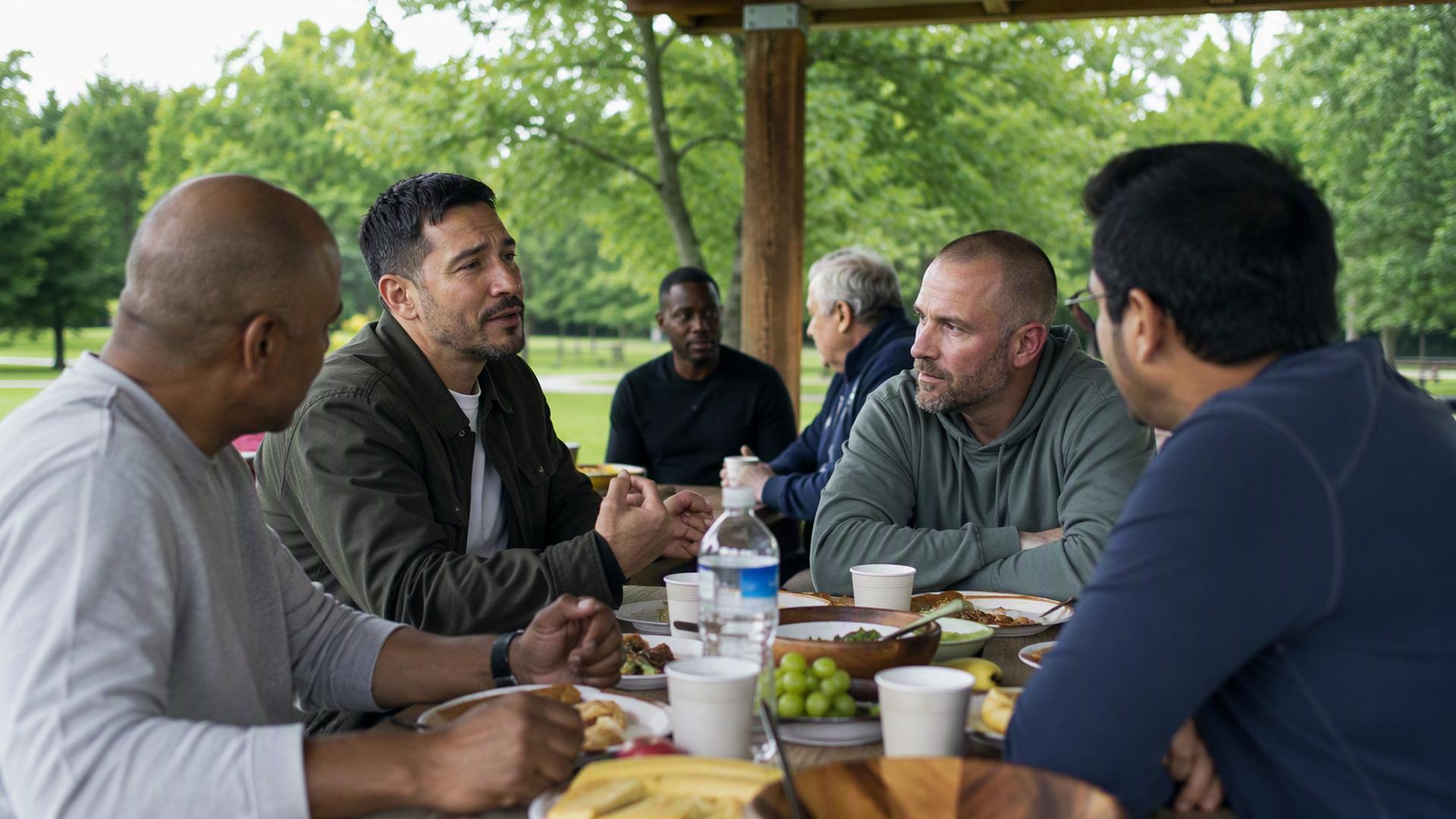
Why Brotherhood and Community Matter in a Man's Recovery Journey
Addiction is often accompanied by a profound sense of isolation. Many men come to believe that their struggles are theirs alone to resolve, and that asking for help is a sign of failure. Brotherhood directly challenges that belief. Within a structured community of men who have navigated similar experiences, a man is not defined by his problem but supported through it.
This kind of community does more than help men stop using substances; it provides a foundation to stand on when life becomes difficult, and that foundation is where meaningful, lasting recovery begins.
What Brotherhood in Men's Recovery Really Means
When "brotherhood" comes up in men's recovery, it's not about casual friendship. It refers to a structured peer support network built around consistent engagement with men who've shared similar experiences with addiction. In faith based rehab settings, this sense of brotherhood often carries additional depth, rooted in shared values and a collective commitment to healing.
Members show up regularly, stay honest, and don't disappear without notice. Emotional openness takes priority over toughness. Men are encouraged to talk directly about triggers, cravings, and shame, supported by regular check-ins, clear group norms, and constructive feedback.
These structures can improve accountability, reduce relapse risk, and increase perceived social support. Brotherhood can become a stabilizing force in long-term recovery, offering both practical guidance and a genuine sense of belonging.
Why Addiction Is So Isolating for Men
Long before a man recognizes he has a problem, addiction quietly shrinks his world. Social circles narrow, routines revolve more around substance use, and fewer people know what's actually going on. Secrecy and shame grow, making honest conversation harder.
Most men are raised to handle problems on their own and avoid showing vulnerability. Pulling back and keeping things private can feel normal, even when the need for support is at its peak. Research consistently shows men are less likely than women to seek mental health or addiction treatment, and they tend to wait until consequences are severe before asking for help.
In the meantime, emotions get buried, and distress gets managed through continued use rather than conversation or professional care. This cycle of suppression and isolation deepens the problem. Reduced social support is directly linked to higher levels of loneliness, psychological distress, and relapse risk.
How Masculinity and Shame Block Asking for Help
Masculinity norms around self-reliance and emotional control can quietly function as barriers to getting help. When men are raised to value stoicism, asking for support gets framed as weakness, and many delay seeking care until things become severe.
These norms also shape how emotions get expressed. Fear, sadness, and vulnerability often stay hidden while anger or irritability surface in their place. Underlying pain, trauma, or loss goes unacknowledged, and conditions like depression, anxiety, or PTSD can go untreated for years.
To cope, many men self-medicate with alcohol or other substances, setting up a cycle where untreated mental health issues and substance use feed each other. Over time, this worsens psychological symptoms, increases social withdrawal, and makes it even harder to reach out for appropriate care.
Inside Male-Specific Addiction Recovery Programs
Male-specific recovery programs vary in format, but they share a common goal: creating an environment where men can address substance use without the pressure to appear emotionally bulletproof.
Most rely on structured daily routines, defined treatment goals, and physical activities that promote accountability and engagement. Group therapy is a core component, where men are encouraged to name emotions beyond anger, including fear, grief, and shame. This directly challenges the masculinity norms that keep many men stuck.
Long-term support is typically built in from the start. Alumni groups, peer support meetings, and regular check-ins after formal treatment help maintain social connection, which research consistently links to better outcomes in sustaining sobriety.
Staying Sober Through Groups and Service
When treatment ends and daily life resumes, peer support and service roles become key to maintaining sobriety. Recovery groups give men a space to talk openly about cravings, high-risk situations, and past behaviors, rather than retreating into silence. Hearing others share similar experiences reduces the isolation and shame that often precede relapse.
Active involvement also builds accountability. Regular attendance, peer check-ins, and reaching out to men in early recovery create a structure where shifts in mood or behavior are more likely to be noticed and addressed before they escalate.
Organizations like AA, NA, alumni networks, and online recovery communities extend this support well beyond formal treatment. They provide practical backup during work stress, relationship difficulties, or major life transitions, reducing the risk of facing hard moments alone.
Keeping Brotherhood Alive After Treatment and Movember
Movember ends every November, but the issues it raises around men's mental health and addiction don't. For many men, the campaign creates an opening to acknowledge problems and start conversations they'd normally avoid. Sustaining that momentum matters.
Programs like those at Spirit Mountain Recovery work to keep that conversation going by examining how social expectations of masculinity affect mental health and addiction. Through group discussion, education, and shared experience, ideas of strength get reframed to include emotional openness and help-seeking.
Structured alumni networks play a significant role after treatment ends. Common elements include:
- Weekly virtual check-ins for consistent connection and accountability
- Periodic in-person gatherings to reinforce community bonds
- Group activities like outdoor trips that offer substance-free ways to manage stress
- Peer support available around the clock for practical and emotional assistance
Ongoing social support and accountability are associated with lower relapse rates because they reduce isolation and increase access to help when early warning signs appear.
Conclusion
Brotherhood is not an optional component of recovery. It is one of its most reliable foundations. Choosing community over isolation means gaining access to men who understand the weight of addiction, who will challenge avoidance, and who will recognize progress that might otherwise go unacknowledged. The work of recovery does not have to be carried alone. Consistent presence, honest communication, and a willingness to support others are what sustain it. When formal treatment ends and awareness campaigns like Movember conclude, a genuine commitment to brotherhood is what keeps recovery intact, one conversation, one meeting, and one day at a time.